


Summarize this article with AI Open a summary of this article in your preferred assistant
To choose a denim manufacturer, decide whether you need a fabric mill or a jeans factory, and whether you want CMT or full package production. Then check the factory's product experience, minimum order, how it develops and repeats washes, sampling and quality control, lead times, certificate scope and export experience, and compare quotes made on the same brief.
To choose a denim manufacturer, first decide whether you need a fabric mill or a jeans factory. Then check the factory you shortlist: whether it already makes your garment type, whether its minimum order fits your quantities, how it develops and repeats washes, how it samples and checks quality, and what its certificates actually cover.
Mill, jeans factory, CMT or full package
"Denim manufacturer" is used for two different businesses. A denim mill dyes the yarn, weaves the fabric and sells it by the metre. A jeans manufacturer is a garment factory: it turns that fabric into finished jeans, shirts and jackets. A brand that wants finished products needs the second kind, even when it chooses the fabric itself.
Garment factories work in two main ways.
| Model | What the factory does | What you handle | Suits |
|---|---|---|---|
| CMT (cut, make, trim) | Cuts, sews and finishes your garments | Buying and delivering fabric and trims | Brands with their own fabric and trim suppliers |
| Full package | Sources fabric and trims, makes patterns and samples, produces, washes and packs | The brief, approvals and payment | Brands that want one supplier responsible for the whole product |
Ask which model a factory works in before you compare prices, because a CMT price and a full package price cover different work.
Product fit and minimum order
A factory that sews shirts well is not automatically good at jeans. Ask which garments it produces now, and for photos of recent work in your category: men's or women's jeans, stretch or rigid denim, shirts or jackets.
Then ask what the minimum order applies to. It can be counted per style, per colour or per wash, and some fabrics and washes carry their own minimums. Our article on low MOQ jeans production explains how small first orders are planned.
Washing: how a wash is developed and repeated
The wash gives jeans much of their final look, and it has to come out the same in every batch and every reorder. Ask the factory:
- which washes and finishes it runs: rinse, stone, enzyme, acid wash, laser finishing, distressing;
- whether washing is done in its own unit or at a partner laundry;
- how wash colour is checked between batches;
- whether you approve a physical wash standard on the sample.
If you are not sure how to describe the look you want, our guides to denim washing techniques and faded jeans explain the terms.
Sampling, quality control and lead times
Ask how long a first sample takes, what it costs and how many rounds are included. Then ask how bulk production is checked against the approved sample: fabric checks before cutting, measurement checks during production, wash tone checks for each batch and a final inspection before packing. Many buyers also book an inspection to an agreed AQL level before shipment; our article on AQL inspection in denim manufacturing explains how it works.
For lead times, ask for two numbers: sample time, and bulk production time after the sample is approved. Shipping to your market comes on top.
Certificates and audits: read the scope
A certificate logo on a website says little on its own. Ask for the certificate itself and check:
- the holder's legal name and facility address, and whether that is the factory that will make your order;
- the validity dates;
- the product groups and processes in the scope;
- the issuing body, which can confirm whether the certificate is valid.
A certificate tells you what was certified, where and until when. Read those lines before you look at the logo.
For material claims such as organic or recycled content, a scope certificate shows that a company is certified for certain products. It does not prove that a specific shipment is certified; that proof usually comes as a transaction certificate for the goods.
Social audits work differently. SMETA is an audit run through the Sedex platform. Every SMETA audit covers labour standards and health and safety, and the 4-pillar version adds environment and business ethics. Ask for the audit date, the scope and how the findings were closed.
Our certificates page lists each certificate with its number, issuing body, validity dates and the product groups it covers. The wording matters: our C-TPAT document, for example, is an independent third-party verification of 12 supply chain security areas, issued by GSCS International. It is not a U.S. CBP C-TPAT membership.
Export experience, labels and visits
Ask which countries the factory already ships to and whether it can produce to your market's label rules. In the EU, textile fibre names and labelling follow Regulation (EU) No 1007/2011. Our guides for EU brands and US brands go through the documents and labels.
If you can, visit the factory, or ask for a video call from the production floor. You see the sewing lines and the sample room, and you hear how the team answers technical questions.
Questions to ask a denim manufacturer
| Question | A useful answer includes |
|---|---|
| Which denim garments do you produce now? | Product types, men's or women's, photos of recent work |
| Do you work CMT or full package? | Who sources fabric and trims, and who follows up if they arrive late |
| What is your minimum order? | Whether it counts per style, colour or wash, plus any fabric or wash minimums |
| How long do sampling and bulk production take? | Sample time, bulk time after approval, and what changes the timing |
| How do you keep washes consistent? | An approved wash standard and a check for every batch |
| How is quality checked? | Fabric, measurements, wash tone and a final inspection; AQL if agreed |
| Which certificates and audits do you have? | Certificate numbers, scope, validity dates and issuing body |
| Which markets do you export to? | Countries, and experience with their labels and documents |
| Can we visit? | The facility address, and a visit or video call |
How Kuzgunlar Textile answers these questions
| Question | Our answer |
|---|---|
| Products | Jeans, denim shirts and denim jackets for men and women, including ripped jeans and denim shorts |
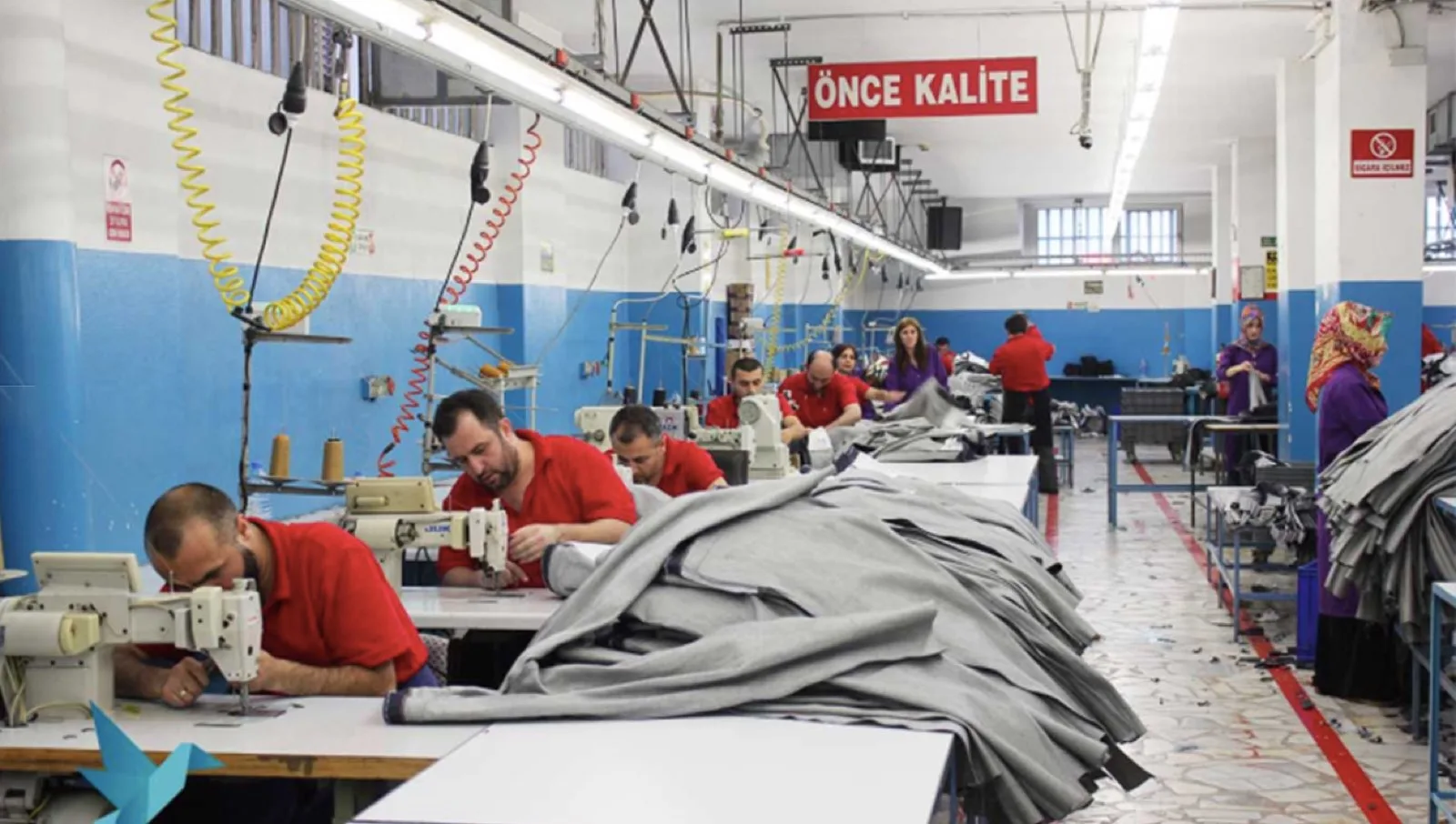
| Working model | Private label or your own design. We manage design and product development, pattern making, cutting, sewing, washing, quality control, ironing and packing, and source fabric and trims to the brief |
| Minimum order | 100–150 pieces per style; some fabrics and washes have their own minimums |
| Sample and bulk | A sample in 7–10 days once the brief is clear; bulk production in 3–5 weeks, depending on the quantity and approvals |
| Washes | Rinse, stone and enzyme washes, laser finishing and distressing, matched to the approved wash standard for every batch |
| Quality checks | Fabric before cutting, measurements against your size chart, wash tone for every batch, final inspection before packing |
| Certificates | Listed with numbers, scopes and validity dates on our certificates page |
| Export markets | Germany, the United States, the Netherlands, Spain and France |
| Visits | Our production floor, sample showroom and offices are in Gaziosmanpaşa, Istanbul, and buyers are welcome to visit |
To get a quote, send a tech pack, sketch or reference garment, the quantity per style and size split, your fabric and wash preference, the trims and labels you want, and your target date and destination country. Contact our team, or read more about Kuzgunlar Textile as a denim manufacturer in Istanbul.
Sources
Frequently asked questions
How many denim manufacturers should I contact?
Contact a short list, send each one the same brief and compare the answers line by line. Quotes are only comparable when they cover the same fabric, wash, trims and quantity.
What should a jeans tech pack include?
Flat sketches, a measurement chart with tolerances, fabric and wash details, trims such as buttons, rivets, zips and labels, stitching and thread colours, and packing instructions. A reference garment helps while the tech pack is still incomplete.
Can I order small quantities from a denim manufacturer?
Ask how the minimum is counted before you plan the order. At Kuzgunlar Textile it is 100–150 pieces per style, and one order can mix styles from different collections.
What is the difference between private label and custom design?
Private label means a garment is produced with your labels, trims and packaging. Custom design means the garment is developed from your own design or tech pack.
0 comments
Leave a comment
Your comment will be published after review.