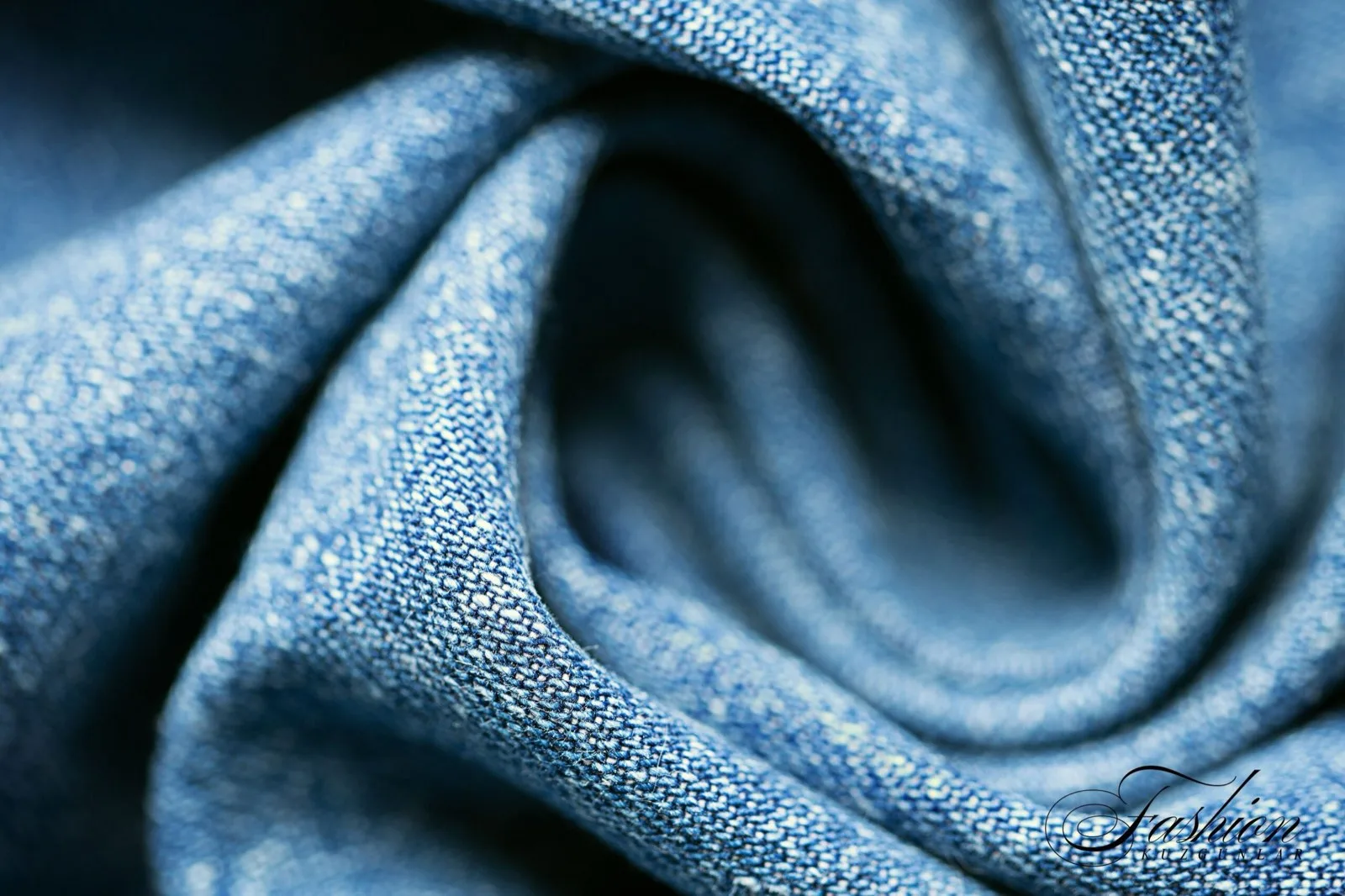
Denim fabric is made by spinning cotton into yarn, dyeing the warp with indigo, coating it with size, weaving it as a twill and finishing the cloth. Each stage shapes the jeans: dyeing sets how they fade, sizing sets stiffness before the wash, weaving sets the diagonal look and width, and finishing sets residual shrinkage and leg twist.
Denim fabric is made in five mill stages: cotton is spun into yarn, the warp yarn is dyed with indigo and coated with size, the yarns are woven into a twill, and the cloth is finished. Each stage shows up in the jeans you receive, in how they fade, feel and shrink, and each one gives you a line to write on the spec.
This guide is for brands that order jeans, denim jackets or shirts and want to read a mill sheet with confidence. It stops where the roll leaves the mill. We are a jeans factory in Istanbul: we source the fabric to your brief and make the garment from it, and the steps from cutting to packing are in our jeans production process guide. The mill stages below follow Cotton Incorporated's bulletin ISP 1010, Denim Fabric Manufacturing, with finishing and loom details from the sources named where they appear.
Spinning: ring-spun, open-end and slub yarns
Everything starts with cotton fiber spun into yarn. Before the late 1970s all denim yarn was ring spun. Today a fabric can combine ring-spun and open-end yarns, and the mill names the pair warp first: ring/OE means a ring-spun warp and an open-end filling yarn. ISP 1010 says that mixing the two can lower fabric cost while keeping some of the favorable ring-spun characteristics.
Yarn size follows the product. Warp yarns for bottom-weight jeans typically run from Ne 4.0 to Ne 12.5, and finer yarns, from Ne 12.5 to Ne 30.0, go into lighter jeans and chambray shirting. Yarn size is one of the inputs to the fabric's weight, which our denim weight guide covers in full.
Spinning machines can also be set to make slubs, the thick places in a yarn, with chosen lengths and spacing. The bulletin says this lets open-end yarn look more like ring-spun yarn and gives ring-spun yarn a rougher, "antiqued" quality. That is one source of the uneven, textured look of some jeans. Stretch also enters at this stage, as an elastane core inside a cotton-wrapped yarn, which we explain in our guide on whether denim is natural or synthetic.
Summarize this article with AI Open a summary of this article in your preferred assistant
Indigo dyeing: why jeans fade, and what rope and slasher dyeing change
In most denim the warp yarns are dyed with indigo and the filling yarns are left undyed. Indigo is an unusual dye. It has a very low affinity for cotton, so it collects in the outer layers of the yarn and leaves a white core. ISP 1010 calls this ring dyeing and points out that with most other dyes it would count as a defect. In jeans it is the reason for fading: when the blue surface wears or washes away, the paler core shows through. Our guide to faded jeans shows what light, medium and heavy fade look like.
One dip in the dye bath gives a light blue. To build a deep blue, the yarn is dipped, exposed to air so the dye oxidizes, and dipped again, typically three to twelve times. A sulfur dye applied before the indigo (a sulfur bottom) or after it (a sulfur top) deepens or shifts the shade, and the bulletin notes that a sulfur top behaves differently in garment washing than a sulfur bottom.
There are two main ways to run the dyeing:
- Rope dyeing feeds ropes of yarn through a line of indigo baths. The ropes are then opened back into a flat sheet before sizing.
- Slasher dyeing dyes the yarn as a flat sheet on the same machine that applies size. ISP 1010 says it suits lightweight denims, needs less floor space and allows smaller production runs and quicker turnaround. Where a machine cannot do several dip-and-air cycles, only light and medium shades are possible.
Wikipedia's denim article adds that uneven dye circulation in a sheet-dyeing bath can cause side-to-side color variation in the woven cloth, while rope dyeing spreads any variation evenly across the warp. So if your reference is a deep, even indigo, the dyeing route is a fair thing to name on the spec.
Shade also has to hold from one dye lot to the next. The bulletin describes sequential dyeing: yarn dyed right before and right after a given lot is the closest in color to it, which keeps color variation between panels smaller after garment washing. A reorder is still a new production run, often with a new fabric lot, and the shade can differ slightly. Our guide to choosing a denim manufacturer lists how a factory should handle that.
Why does new denim feel stiff?
Because the warp yarn is coated with size before weaving. The coating protects the yarn from abrasion at the loom and keeps the indigo from rubbing off. For many years the size was native or slightly modified starch, and the bulletin says the shift to garment-washed denim led to new recipes, with the type and amount chosen to suit the finishing that follows.
Most denim warp yarns carry 7 to 14 percent of their weight in size. In many styles some of it stays on the cloth and stiffens it for cutting and sewing, which the bulletin names as the reason certain jeans feel stiff off the rack. A rinse wash takes the starch out. Size also changes what a weight figure means, so the loom-state and finished weights of the same fabric differ, as we explain in the weight guide.
Weaving: twill, looms and selvedge
Denim is woven mostly as a 3/1 twill, and also as 2/1 twill and as broken twills. In a 3/1 twill each warp yarn goes over three filling yarns and under one. The face of the cloth therefore shows mostly the blue warp, and the back shows mostly the undyed filling, which is why the inside of jeans is paler.
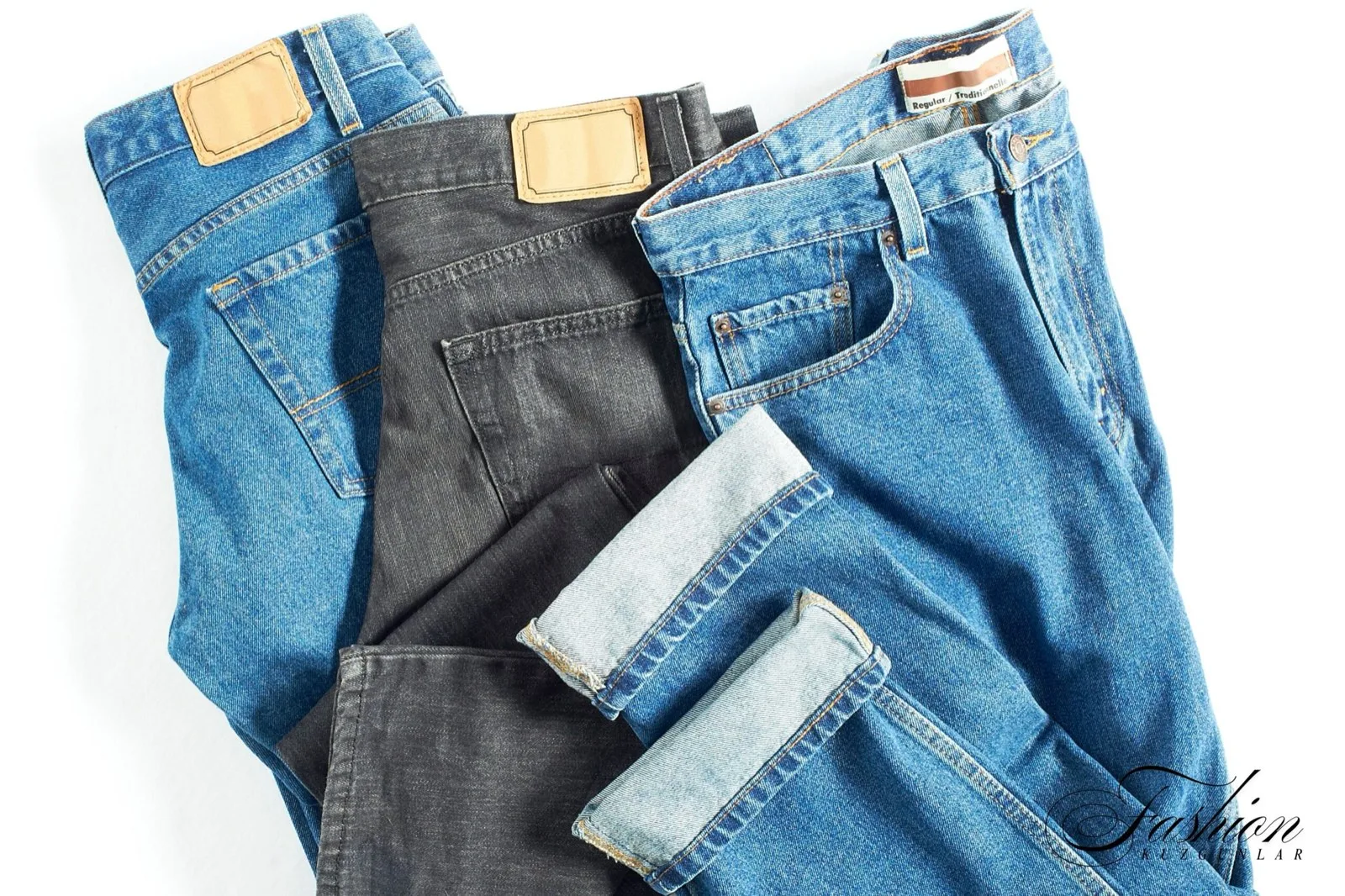
The twill line runs diagonally, rising to the right in a right-hand twill and to the left in a left-hand twill. ISP 1010 says the line looks more pronounced, and the hand a little softer, when the twist direction of the warp yarn is opposite to the twill direction. Open-end yarn only comes in one twist direction, so it suits left-hand twills where a pronounced line is wanted. If you are matching a reference garment, a swatch settles the diagonal faster than words.
The same diagonal has a side effect. A US patent on leg twist (US 3,959,826) attributes the problem, in which jeans legs rotate after washing, to tensions in the fabric that are tied to the direction of the twill. Its remedy is to skew the fabric deliberately during finishing so that those tensions are relieved before garments are made. Leg twist is also worth checking on the first wash sample, as we note in our tech pack guide.
The loom decides the width and the edge of the cloth. ISP 1010 says most denim is woven with projectile or air-jet filling insertion, and that shuttle weaving has been replaced to a large degree. Wikipedia states that shuttleless looms make cloth 60 inches (1,500 mm) wide or more, while shuttle looms typically make cloth about 30 inches (760 mm) wide, and that shuttle-woven denim is recognizable by its selvedge, the finished edge of the cloth. Width matters to a garment maker because it changes how many garments one yard of fabric yields, so the usable width between the selvedges goes on the spec. Wikipedia also notes that a garment that shows its selvedge needs more careful assembly, so a selvedge style is planned in the pattern from the start.
Thread count completes the construction. ISP 1010 gives 62 x 38 as a typical bottom-weight denim: 62 warp yarns per inch of width and 38 filling yarns per inch of length, in that order. With yarn size, this count shapes the weight, tightness, drape and hand of the cloth.
Does sanforized denim still shrink?
Less than untreated denim, but some. Sanforization, described on Wikipedia, is a compressive treatment that stretches, shrinks and fixes the cloth in length and width so that it shrinks less in later washing. It is done before cutting. A Fibre2Fashion overview of denim processing places it at the end of the fabric finishing sequence, after a light singe, scouring and washing that takes starch off the cloth.
What is left after the mill's finishing is the residual shrinkage, and that is the figure for the spec, with the test method behind it. Our wash comes on top of it: the jeans we make are washed as finished garments, and the wash shrinks and softens the fabric, so the pattern allows for it. Raw, or dry, denim has had no wash after sewing and can shrink when it is first washed. Our tech pack guide shows where the shrinkage figure goes next to the size basis.
Stage by stage: what to write on the spec
| Mill stage | What it decides in your jeans | What to put on the spec |
|---|---|---|
| Spinning | Surface character, from even to slubby, the fabric's cost, and how it stretches | Warp and filling yarn types in that order (for example ring/OE), slub or plain, and core-spun or mechanical stretch |
| Indigo dyeing | Depth of blue, how the jeans fade, and how steady the shade is between lots | A shade reference swatch, sulfur bottom or top if your reference has it, rope or slasher dyeing, and the mill's lot-to-lot shade control |
| Sizing | Stiffness before the wash, and the weight figure | Whether the weight is loom state or finished, with the tolerance the mill guarantees |
| Weaving | Diagonal look, hand, cloth width and yield, selvedge | Twill type and direction, ends x picks, usable width between selvedges, selvedge or not |
| Finishing | Residual shrinkage and leg twist after washing | Residual shrinkage after finishing with its test method, and leg twist checked on the first wash sample |
What happens after the roll reaches us
We do not spin, dye or weave. We source the fabric, including its weight and stretch, to your brief, and fix it on the sample together with the wash. When the roll arrives we check the fabric before cutting. After sewing, the garment is washed, and during production we compare the wash tone with the wash standard approved on the sample. Our guides to denim washing techniques and the jeans production process pick up from here.
If your brief includes organic or recycled content, the claim for delivered goods rests on a valid Transaction Certificate, and our certificates page names the product groups each of our certificates covers.
To start, send a reference garment, a swatch, or the fabric row of your tech pack. A sample takes 7 to 10 days once the brief is clear, and our minimum is 100 to 150 pieces per style. You can see what we make in our collections, read about our production, or send us your brief.
Frequently asked questions
Is denim usually 100% cotton?
Is selvedge denim the same as raw denim?
Which countries make most of the world's denim fabric?

0 comments
Leave a comment
Your comment will be published after review.