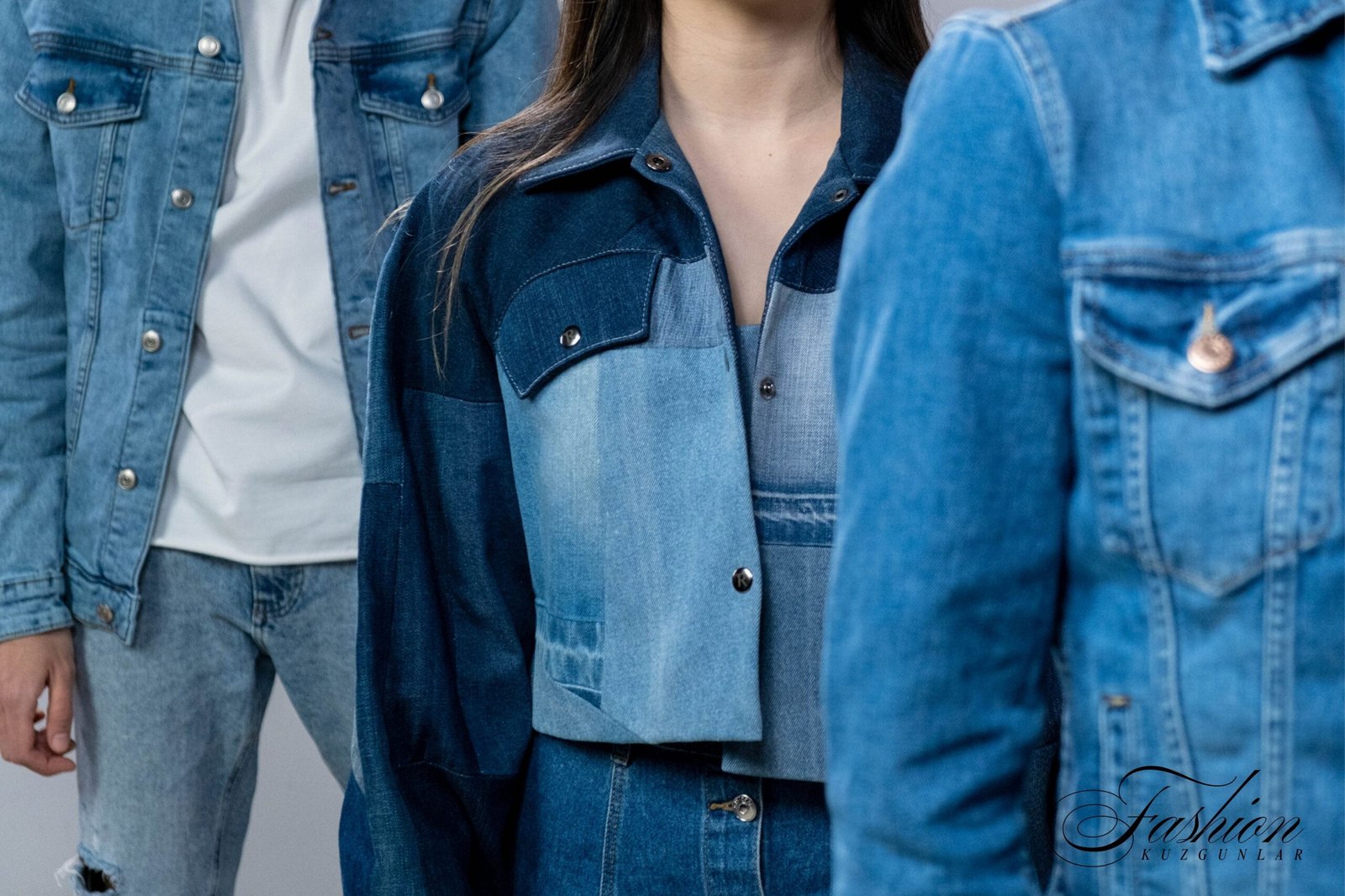
Men’s and women’s jeans are often perceived as similar products differentiated only by style, yet in professional denim manufacturing they represent two technically distinct product groups. Differences in anatomy, usage expectations, and market positioning require separate pattern systems, fabric selections, and construction standards. As an experienced denim manufacturer in Turkey, Kuzgunlar Jeans develops men’s and women’s jeans through independent technical workflows to ensure fit accuracy, durability, and commercial consistency.
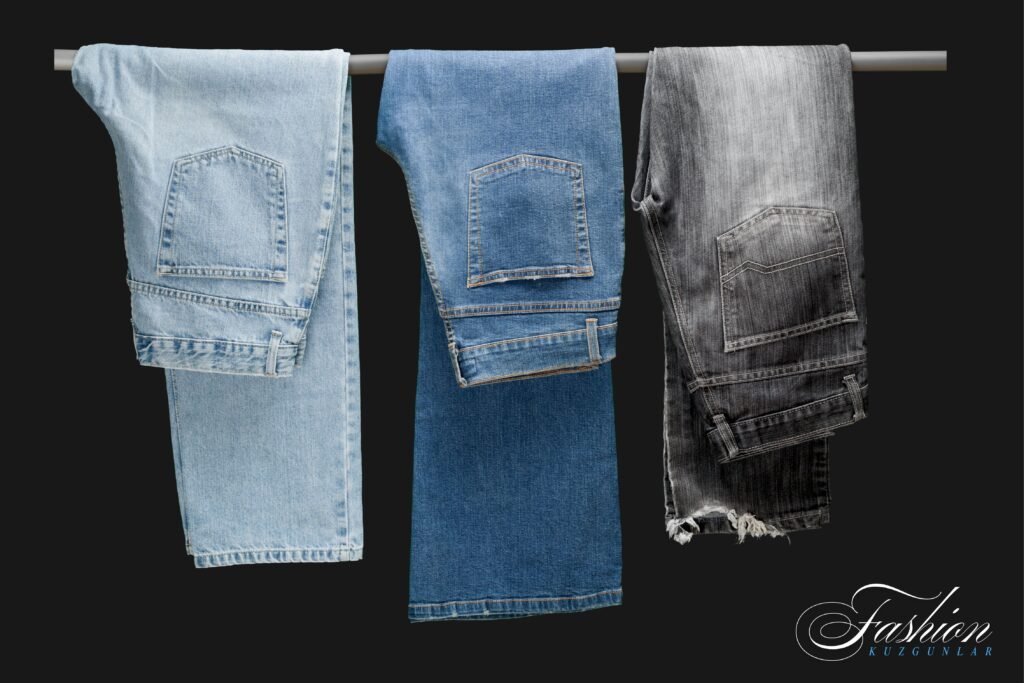
Structural and Fit Differences Between Men’s and Women’s Jeans
Men’s and women’s jeans differ primarily at the pattern engineering and fit development stage. At Kuzgunlar Jeans, separate base blocks are used for each category due to fundamental anatomical and functional requirements.
Men’s jeans are constructed with a straighter hip-to-waist ratio, generally using a lower back yoke angle (approximately 8–10°) to maintain a balanced and relaxed silhouette. Front and back rise measurements remain relatively uniform, prioritizing comfort, mobility, and long-term wear performance.
Women’s jeans, in contrast, require a higher back rise and a steeper yoke angle (commonly 12–18°) to accommodate hip curvature and waist definition. Pattern grading follows a differential scaling method, where hip, thigh, and seat measurements increase at a higher rate than the waist, directly affecting seam stress distribution and fabric recovery.
Leg geometry also varies. Men’s denim typically maintains consistent knee and hem proportions across size ranges, while women’s denim adjusts knee, calf, and hem widths more dynamically depending on fit types such as skinny, flare, straight, or wide-leg models.
Fabric, Construction, and Manufacturing Specifications
From a production standpoint, men’s and women’s jeans differ in fabric weight, stretch composition, and construction detailing. Men’s denim commonly utilizes heavier fabric weights ranging from 12.5 oz to 14.5 oz, often with minimal or zero elastane content to enhance durability, abrasion resistance, and structural stability.
Women’s denim is frequently produced using comfort stretch or power stretch fabrics, typically weighing 10.5 oz to 12 oz, with elastane ratios between 1% and 3%. These specifications support body contouring while maintaining shape retention and wearer comfort.
Construction details further separate the two categories. Men’s jeans incorporate deeper pocket bags, reinforced bar tacks, higher stitch density, and heavier-duty hardware at stress points such as the fly, inseam, and crotch. Women’s jeans often use shorter pocket depths, lighter rivets, and finer thread counts to reduce bulk and enhance visual refinement.
At Kuzgunlar Jeans, men’s and women’s denim are manufactured on dedicated production lines, each supported by category-specific wash recipes, shrinkage tolerances, and quality control benchmarks. Our capabilities are detailed through our
Men’s Denim Manufacturing and Women’s Denim Manufacturing services, enabling brands to achieve consistent fit accuracy, wash stability, and scalable production.
By applying specialized technical standards rather than generalized approaches, Kuzgunlar Jeans delivers denim products engineered for international wholesale, private label, and export markets with precision and reliability.