
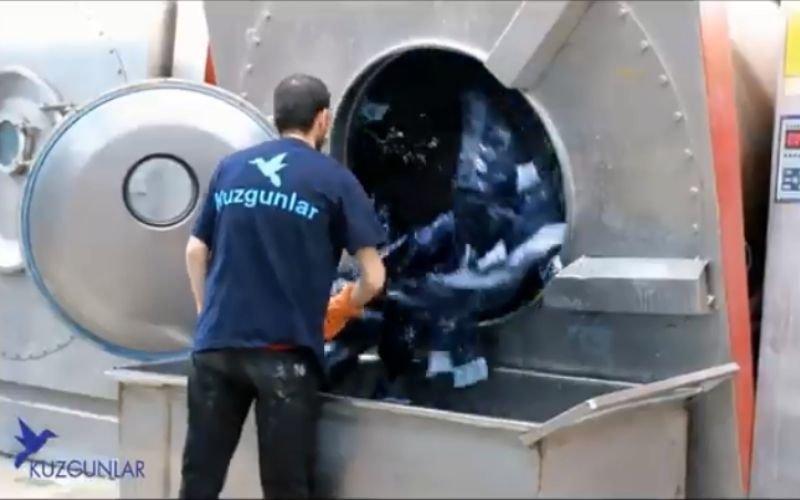
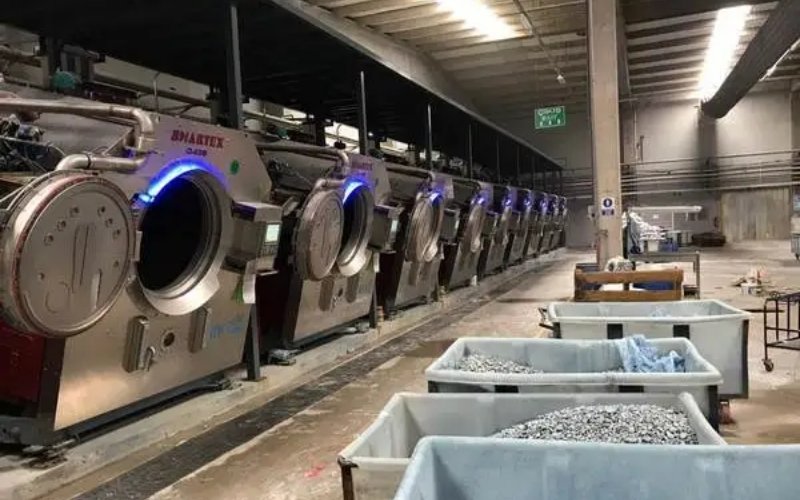
Rinse wash in denim manufacturing is a controlled finishing process used to remove excess dye, starch, and production residues from raw or dyed denim while preserving the fabric’s original character. Unlike stone wash, enzyme wash, or heavily distressed treatments, rinse washing focuses on fabric stabilization, cleaner appearance, improved hand feel, and more predictable shrinkage rather than creating pronounced fading or abrasion.
For fashion brands sourcing from Turkey, rinse wash jeans offer a practical balance between authentic indigo appearance, fit consistency, production efficiency, and long-term wear. At Kuzgunlar, an Istanbul-based denim manufacturer in Turkey, rinse wash is applied as a controlled finishing option for brands that need clean, uniform denim with the original fabric tone and construction largely preserved.
From a manufacturing perspective, the primary purpose of a rinse wash is not to make denim look heavily worn. Instead, the process prepares the garment for commercial use by reducing residual processing materials, improving softness, controlling dimensional stability, and helping establish a more predictable final appearance. This makes rinse-washed denim particularly suitable for premium jeans, private label collections, minimalist denim lines, and brands that want an authentic indigo base without aggressive surface treatment.
Because rinse washing generally involves less intensive mechanical and chemical treatment than many fashion wash techniques, it can also support denim collections where fabric integrity, repeatability, resource efficiency, and consistent production standards are important. The exact wash recipe, temperature, duration, liquor ratio, mechanical action, and drying conditions can be adjusted according to the denim fabric, garment construction, target shrinkage, and desired hand feel.
In short, rinse wash is the preferred denim finishing method when the objective is to clean and stabilize the garment while maintaining its original indigo character rather than deliberately creating a faded or distressed effect.
Rinse Wash vs Other Denim Wash Types
Rinse wash jeans are often confused with stone wash, enzyme wash, or vintage wash, but the differences are substantial. While stone or enzyme washes intentionally abrade the fabric to create worn effects, rinse wash preserves the denim’s structure and strength.
Key distinctions include:
-
No artificial fading or abrasion
-
Minimal water and chemical usage
-
Original indigo tone remains intact
For manufacturers like Kuzgunlar in Turkey, rinse washing is frequently chosen by fashion brands seeking timeless, versatile denim suitable for both casual and smart-casual collections. It is also preferred in sustainable denim lines due to its lower environmental impact compared to aggressive wash methods.

Why Brands Choose Rinse Wash Jeans from Turkey
Turkey is globally recognized for high-quality denim production, and Istanbul remains a strategic hub for advanced textile manufacturing. Brands working with Kuzgunlar benefit from precision-controlled rinse wash processes that meet international quality and consistency standards.
Rinse wash jeans are favored because they:
-
Offer predictable sizing and fit stability
-
Age naturally over time with authentic wear patterns
-
Appeal to consumers who prefer minimal processing
As a denim exporter and manufacturer in Istanbul, Turkey, Kuzgunlar integrates rinse wash techniques to deliver jeans that balance authentic denim character, modern production efficiency, and global brand expectations.